
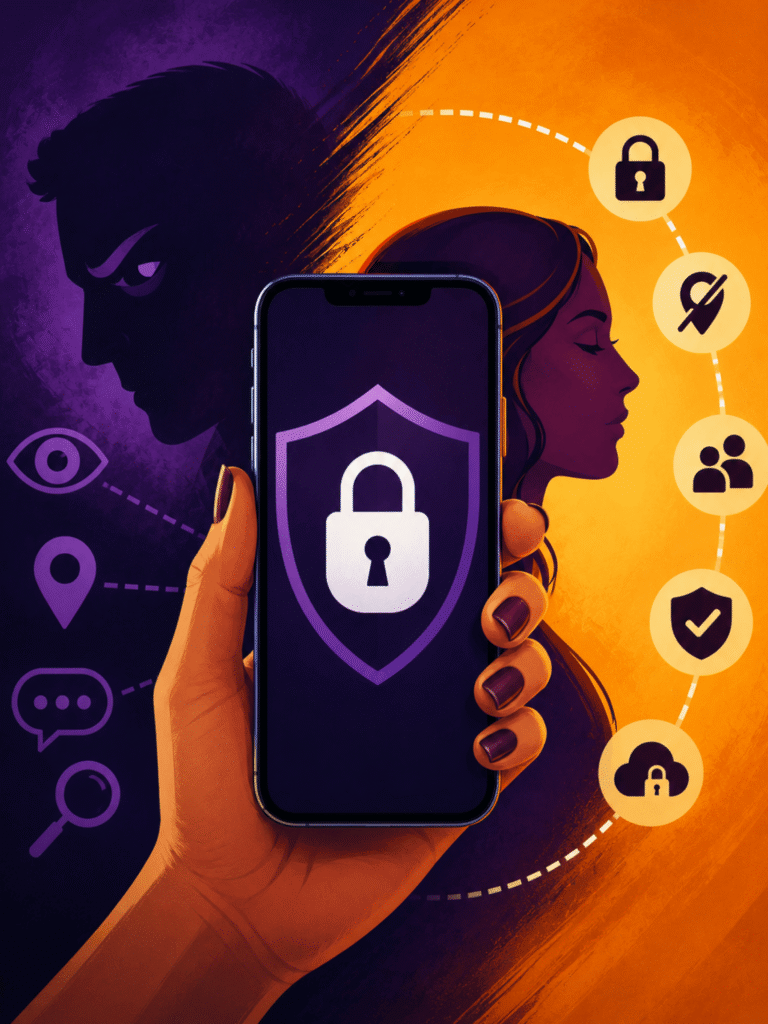
Smartphones help us stay connected, manage daily responsibilities, and access important resources. For survivors of domestic violence, however, a phone may also be used to track locations, monitor conversations, access private accounts, or maintain control. A survivor may become concerned when an abusive person seems to know where they have been, who they have contacted, or information shared only through their phone. Someone with access to the device, wireless account, email, Apple ID, or Google account may be able to view personal information or change security settings. At MCADV, we encourage survivors to trust their instincts and include smartphone safety in their overall safety planning.
Pause Before Making Changes
It may be tempting to immediately delete an unfamiliar app, change passwords, turn off location services, or reset the phone. However, sudden changes could alert the abusive person and increase the risk of escalation. When possible, speak with a domestic violence advocate before making major changes. Use a safer phone or computer that the abusive person has not accessed to research resources, update passwords, or ask for assistance.
Smartphone Safety Checklist
Every situation is different. Consider these steps only when it is safe to do so:
✔️ Secure your phone and accounts.
Use a strong passcode. Review the security settings for your phone, email, wireless account, Apple ID, Google account, and other connected services. Change passwords from a safer device and avoid using the same password for multiple accounts.
✔️ Review location sharing.
Check which apps can access your location. Review social media, photo, family-sharing, fitness, transportation, and phone-finding settings. Turning off one feature may not stop all location sharing.
✔️ Check connected devices and unfamiliar apps.
Look for old phones, tablets, computers, or smartwatches connected to your accounts. Review your apps and settings for anything unfamiliar. Use caution before deleting a suspicious app because removal may alert the abusive person.
✔️ Log out when appropriate.
Logging out of email, banking, social media, and other accounts may prevent someone with physical access to your phone from viewing them. Consider whether an unexpected logout could raise suspicion.
✔️ Limit sensitive information.
Review private messages, photographs, documents, contact names, voicemails, browsing history, and notifications. Remember that information may also be saved in a cloud account.
✔️ Document Technology Abuse
When it is safe, save screenshots, messages, account alerts, dates, phone numbers, and details about suspicious activity. Store this information somewhere the abusive person cannot access.
Technology abuse is still abuse. Survivors deserve privacy, safety, and support. A domestic violence advocate can help evaluate technology concerns and develop a personalized safety plan without making decisions for the survivor. To connect with trained advocates and access domestic violence services in your area, visit MCADV’s directory of domestic violence shelter programs at https://mcadv.org/shelters/.
Source: National Network to End Domestic Violence, Safety Net Project, Survivors’ Guide to Phones: Increasing Privacy and Responding to Abuse.