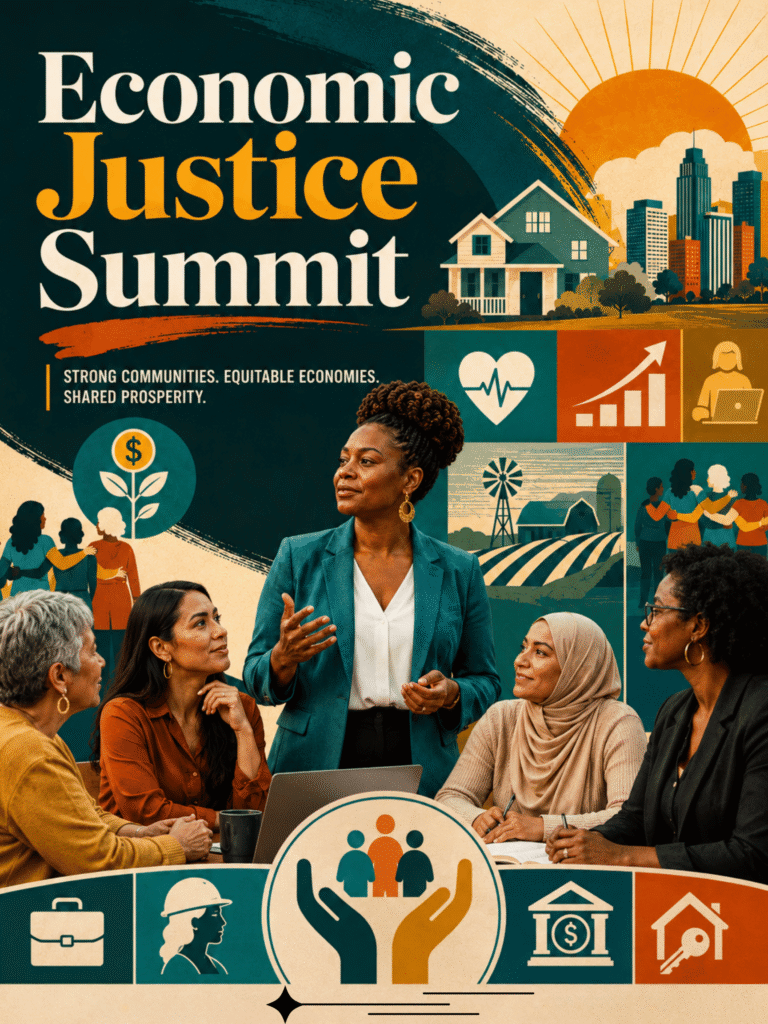
The Mississippi Coalition Against Domestic Violence hosted its 2026 Economic Justice Summit, Safety, Stability, and Self Sufficiency, on June 24, 2026. The summit brought together domestic violence advocates, shelter program leaders, legal professionals, and economic justice partners for a meaningful conversation about the barriers that keep survivors from reaching lasting safety and stability. The summit agenda centered on employment and workforce barriers, housing and economic stability, financial self-sufficiency in advocacy practice, and next steps for survivor centered change across Mississippi.
The day opened with remarks from MCADV Program Specialist Vera Johnson, who shared why this summit was both timely and necessary. She spoke about the difficult realities survivors face when trying to rebuild their lives after abuse, especially when financial control, unsafe housing, limited transportation, and lack of public benefits are part of the abuse they have experienced.
Advocates joined the conversation by sharing the local barriers they encounter when helping survivors move toward independence. They raised concerns about the lack of affordable housing, limited childcare, poor credit caused by financial abuse, job instability, and the shortage of resources in rural communities. The conversation made clear that economic justice is not separate from survivor safety. For many survivors, access to money, housing, transportation, medical care, and employment can determine whether they are able to leave safely and remain safe.
For the morning session, Cassandra Welchlin, Executive Director of the Mississippi Black Women’s Roundtable, led a powerful discussion on workforce barriers and the policy issues that continue to affect women, families, and survivors across the state. She highlighted advocacy efforts around Senate Bill 2772, which focused on eliminating the sales tax on diapers. In Mississippi, where many families struggle to afford diapers, this issue is not small. For parents already choosing between rent, food, childcare, gas, and safety needs, the cost of diapers can become another financial burden.
The discussion also included the State Employees Paid Parental Leave Act and the need for Safe Leave protections. Currently, Mississippi does not have a universal statewide paid Safe Leave law for all workers. Safe Leave is especially important for survivors because it allows time away from work to seek medical attention, legal counsel, or safety planning related to domestic violence, sexual assault, stalking, or other forms of abuse.
Throughout the summit, advocates expressed deep concern and frustration about the limited options available to survivors. Many described the experience as a “hamster wheel,” where survivors and advocates are constantly searching for resources that are either unavailable, too limited, or too difficult to access. One advocate shared, “There’s nothing in place to help protect survivors once they leave, to keep them safe.” Her words captured the emotional weight of the day and the urgent need for stronger systems of support.
The conversation around Medicaid coverage and health care access was especially serious. Gaps in coverage can create serious harm, especially for low income women, pregnant women, postpartum mothers, and survivors in rural communities. Mississippi has not adopted Medicaid expansion, which leaves many women without a clear path to affordable coverage. For survivors in rural areas, the loss of Medicaid or a missed renewal can start a dangerous domino effect, leading to missed appointments, untreated health conditions, delayed care, long travel distances for services, or going without medical care altogether.
The afternoon session was led by Attorney Ashley Richardson, Director of Housing Law at the Mississippi Center for Justice. The session focused on one of the biggest barriers survivors face when trying to rebuild their lives, which is access to safe and affordable housing. Advocates discussed the challenges they often encounter when helping survivors secure and maintain housing, including coerced debt, poor credit, prior evictions, limited rental history, and property owners who may be unwilling to rent to survivors of domestic violence.
The session also covered fair housing laws, housing protections under the Violence Against Women Act, and practical strategies advocates can use to support survivors through housing challenges. The conversation made it clear that more comprehensive housing advocacy training is needed. In response, MCADV will include an in depth housing law and advocacy training in an upcoming training series to help strengthen advocates’ knowledge and improve their ability to support survivors in achieving long term housing stability.
Another important part of the summit focused on financial self sufficiency in advocacy practice. Participants discussed how advocates can incorporate financial literacy into safety planning and help survivors build long term stability. The agenda included a review of Allstate’s Moving Ahead Curriculum, which provides tools advocates can use to support survivors as they rebuild financial confidence, understand credit, and move toward greater independence.
The Economic Justice Summit also allowed space to discuss nontraditional career paths for women, including construction, trucking, and welding. These fields can offer higher wages, health benefits, and opportunities for career growth. For survivors working toward independence, access to stable employment with benefits can make a lasting difference.
By the end of the day, the purpose of the Economic Justice Summit was clear. Survivors need more than immediate crisis support. Advocates need stronger tools, clearer resources, and policy solutions that match the real needs of survivors across Mississippi. The Mississippi Black Women’s Roundtable discussed its strategy for addressing economic instability during the upcoming 2027 legislative session, while advocates and shelter program directors were able to share their immediate concerns and identify the pressing issues they want addressed in the near future and moved forward through legislative advocacy. Staff from MSBWR also provided valuable information on health care topics, including Presumptive Eligibility, and thoroughly explained what it means, how it works, and how advocates can use that knowledge to better help survivors navigate health care needs.
The summit created a meaningful space for open dialogue, expert guidance, and thoughtful questions. Above all, it gave advocates hope that stronger assistance and more accessible support for survivors can become a reality across Mississippi. Attendees left with a renewed focus and a stronger understanding of the work ahead.